
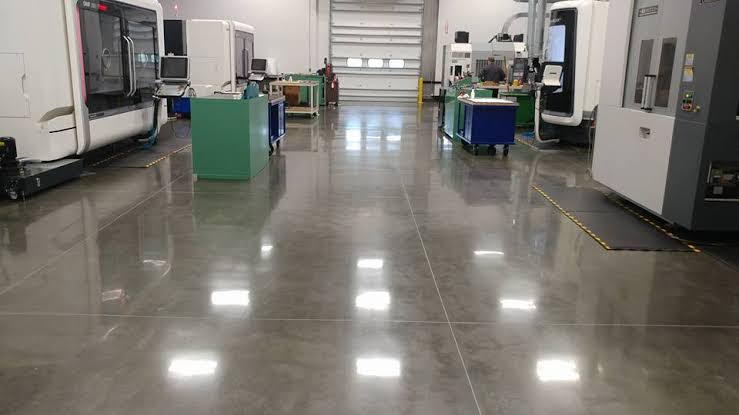
Polished concrete uses the slab itself as the finished surface through progressive grinding, polishing and treatments specified for the system. It can be considered for new or existing factory, warehouse and commercial floors after assessing concrete condition and operating requirements.
Benefits of polished concrete
Finish options combine concrete’s appearance with different gloss levels and aggregate exposure. Actual benefits depend on the slab, preparation, treatment and maintenance. A sample helps establish expectations rather than relying on a photograph or general promise.
Existing slab reuse and sustainability
A suitable slab can become the final finish, reducing the need for another covering and some replacement-related materials and waste. Contributions to green-building or LEED requirements need project-level assessment and material documentation. Polishing alone does not confer environmental certification.
Durability and maintenance economics
Appropriate preparation and treatment can support everyday wear performance and cleaning. The finish uses the slab rather than a separate coating layer. Cracks, repairs or wear may still develop according to the concrete and loads, and protection renewal or repolishing may be needed. A universal 100-year service life should not be assumed.
Slip performance and safety
Specify the finish around pedestrians, equipment, wet conditions, oils and contaminants. Gloss does not guarantee freedom from slipping. Assess relevant slip performance and combine the finish with spill removal, traffic routes and attention to joints.
Cleaning and indoor conditions
An accessible, easy-to-clean surface can support dust removal. Indoor conditions also depend on dust control during work, ventilation and treatment products. Polished concrete is not an allergy treatment or a guarantee against dust mites.
Light reflection and appearance
Higher-gloss finishes can reflect more light and contribute to a brighter-looking space. Energy savings depend on the lighting design, layout and operations. A fixed figure such as 30% needs project-specific evidence.
Stains, oils and moisture
Suitable treatments may reduce absorption of some liquids and help cleaning, but performance varies by product, contaminant and exposure time. Remove spills promptly and follow treatment instructions. Polishing does not make the slab waterproof or immune to staining and efflorescence; moisture problems need separate assessment.
Surface treatment and equipment marks
Compatible densifiers may improve surface hardness but do not repair structural defects or make every weak slab suitable for polishing. Tyre marks depend on wheels, traffic, contamination and cleaning, so complete elimination cannot be promised.
Colour, pattern and aggregate options
Consider low-sheen or higher-gloss finishes and different aggregate exposure. Compatible colours and decorative treatments depend on the sample and specification. These options may affect time and cost, and colour variation or repair marks may remain.
Limitations to consider
Concrete is hard underfoot and may be less comfortable for prolonged standing than resilient finishes. It can feel cold in cooler conditions. Hard surfaces can reflect sound, so comfort, acoustics and user requirements should be considered. Decorative work and extensive repairs can increase cost.
Polished concrete execution stages
Royal assesses the slab and scope before specifying preparation and finish. A representative sample can be agreed before completing the area.
1. Inspect and prepare
Review surface strength, cracks, joints, stains and moisture. Remove contamination and old coverings as required. Specify suitable local repairs and obtain specialist review for structural issues.
2. Initial grinding
Use equipment and tooling appropriate to the concrete and scope. Wet or dry methods should suit the system and site. Dry work needs suitable dust control; wet work needs slurry and water management. Isolate areas to protect people and equipment traffic.
3. Progressive polishing
Use successive tooling stages to reach the agreed appearance. There is no fixed number of stages for every slab. Condition, gloss and aggregate exposure determine the process; compare the result with the approved sample.
4. Treatment and finishing
Apply specified densifiers or protective treatments according to product instructions, allowing required treatment time before final polishing and cleaning. Densifiers do not bond structural cracks. Handover timing depends on the products, sequence and site conditions.
Indoor and outdoor suitability
Concrete needs sufficient strength and a surface suitable for preparation. Existing level and finish influence duration and appearance. New slab finishing can be coordinated with later polishing. External areas, wet zones and pool surroundings need separate assessment of exposure, drainage, texture and slip performance; polishing is not automatically suitable.
Care after installation
Remove abrasive dirt regularly and clean spills promptly with suitable products. Cleaning frequency depends on use and may be daily in working environments. Agree a cleaning and periodic renewal plan at handover.
Request a Royal assessment
Share area, location, photographs, loads and traffic details. Call 01013505025 or 01015508835 to discuss polished concrete preparation and finishing in Egypt.